Sunday, November 16, 2014

The resurrection, the cover-up, and the behavior of dead bodies

John 20:2 Then she runneth, and cometh to Simon Peter, and to the other disciple, whom Jesus loved, and saith unto them, They have taken away the LORD out of the sepulchre, and we know not where they have laid him.

Matthew 27:62-66 Now the next day, that followed the day of the preparation, the chief priests and Pharisees came together unto Pilate, saying, Sir, we remember that that deceiver said, while he was yet alive, After three days I will rise again. Command therefore that the sepulchre be made sure until the third day, lest his disciples come by night, and steal him away, and say unto the people, He is risen from the dead: so the last error shall be worse than the first. Pilate said unto them, Ye have a watch: go your way, make it as sure as ye can. So they went, and made the sepulchre sure, sealing the stone, and setting a watch.

Matthew 28:11-15 Now when they were going, behold, some of the watch came into the city, and shewed unto the chief priests all the things that were done. And when they were assembled with the elders, and had taken counsel, they gave large money unto the soldiers, saying, Say ye, His disciples came by night, and stole him away while we slept. And if this come to the governor's ears, we will persuade him, and secure you. So they took the money, and did as they were taught: and this saying is commonly reported among the Jews until this day.

• • •

Mary's reaction is the natural reaction the typical person would experience if they came to the tomb and the dead man was missing. It is a simple and logical deduction of the human mind based on the common facts about life.

If Jesus is gone, then the first question in everyone's mind is "who took him" and "where did they put him?" A dead man has joined the category of inanimate objects; therefore the question on NO ONE'S mind would be "where did he go," or "what did he do with himself?" It would be like a woman going to a certain drawer where she keeps some diamond jewelry. She opens the drawer and it's not there. What does she say to herself? "Why is my jewelry missing? Someone must have taken it."

But notice how Satan works with these natural human reactions in order to blind people to the reality of the resurrection. He must dance on an extremely fine line of deception, gambling with improbable assumptions, taking the risk that people will fail to observe the preposterous element in the story they are swallowing. It is fascinating to observe how cleverly he conceals the big fat red X in his story, minimizes it, and cloaks it in a web of deception--only to turn around and tell the exact opposite story just hours later, without people seeming to notice anything amiss. At every level, he has to use lies to make his story work, but because the lies are woven in so softly, and because the rest of the logic seems rock-solid, people swallow the whole story.

While Jesus is still dead, the enemy starts his damage control (which, as an aside, implies to my mind that he didn't know at this point that Jesus would actually rise from the dead, since he had to later backpedal on this whole situation and literally turn his lies in the opposite direction). In essence, he whispers to the Pharisees, "If the disciples steal the body, everyone will believe that Jesus has risen from the dead."

No they won't. They will wonder, like anyone else would, who stole the body and where they put it, and an investigation will be conducted, and the facts will come to light, and it will put an end to any more rumors of a resurrection. The disciples themselves came immediately to this conclusion when they found him missing. They were not superstitious, irrational thinkers.

But the enemy is bent on preventing the disciples from stealing the body, so he gets the Pharisees to act on an assumption that is actually counter-intuitive, an assumption that is so well-hidden that it gets eclipsed in the urgency of the danger that the "last error could be worse than the first." All the enemy actually says is that the disciples could "say unto the people, He is risen from the dead." The assumption is, "...and everyone will believe it," but the enemy doesn't even have to say this; it is the hearer's mind that fills in the assumption as if it was stated, and the officials jump into agreement with the necessary action without recognizing that they even made the assumption, much less that it was illogical and improbable. The logical, normal, reasonable reaction of people would be "So? Where did you hide his body?" The enemy bases his whole action strategy on the assumption that masses of people everywhere will suddenly behave in a way that is counter-intuitive and against the normal grain of experience and logic, not in the light of any evidence, but just because they were told a story by a bunch of fishermen and tax collectors. Nevertheless, the Pharisees and Pilate act on this suggestion and guard the tomb. The enemy's gamble paid off, and the leaders fell in line with his manipulation.

Guards and a sealed tomb would likely have successfully kept out even a determined band of loyal body-stealing disciples (if they had come), but no guards could ever prevent the Majesty from on High from rising from the dead, passing through walls, and marching forth onto his now-conquered earth. All things were now under his feet. The enemy was vanquished, stripped of all authority, humiliated. All the enemy had left was deceit.

Jesus rises from the dead, and suddenly the enemy's damage control has to switch gears completely. After the resurrection, things suddenly go from it being the worst thing in the world for the disciples to get the body and tell people that Jesus rose from the dead to "Here's money; tell everyone in the world that the disciples stole the body and announced that Jesus rose from the dead." Now Satan leverages our natural and reasonable expectations about the behavior of dead bodies in order to cast doubt on the resurrection.

Curiously, no one seems to notice that suddenly the positioning message has switched 180 degrees overnight. The deceiver dances the deception dance with skill and alacrity, playing expertly upon people's distractiblity and forgetfulness. The body is missing? Why, someone must have taken it. This is the most common and plausible sounding thing in the world. It's already right there in everyone's minds.  Indeed, it would seem to the reasonable person that he was walking in the truth to believe the "stolen body" version of the story. It goes to show how subtle the enemy's deception is, and how even facts and experience and logic can combine in his hand to keep people in the dark about the truth.

What I find amusing, when all is said and done, is that the setting of the guard actually caused the circumstances to point to the resurrection more than to any other explanation, literally ruling out the likelihood that anyone could have stolen and hidden the body. What do people do when the body turns up missing? They investigate. The investigators would have questioned every interested party to distill the facts. And the facts known to them then would have been the same as the facts known to us now---that the disciples themselves didn't expect the resurrection or have the savvy to concoct a falsehood like stealing the body, that they couldn't have done it anyway because there was a guard, that the guards saw the earthquake, fell down as dead men, and woke up to find an empty tomb, and that they were paid off to report the body was stolen. The dead body never turned up--but the living person of Christ did, and was seen by at least 500 witnesses. The only story that points to is a genuine resurrection. Satan played right into God's hands, even in the midst of weaving his webs of deceit.


Sunday, November 2, 2014

Trail Ridge Road


There is a gorgeous place on earth that I have fallen greatly in love with ever since I first saw it.


You get above the treeline. You probably see lots of elk. You also see incredible views.


Trail Ridge Road.

The highest paved road in the United States, it takes a body up to over 12,000 feet without the necessity of hiking a single step. You just drive up the road and the car does all the work for you.


Of course, this could be a benefit or a drawback, depending on how you look at hiking. I love to hike with all my heart--but this lessens not at all my affinity to go back again and again and simply drive up Trail Ridge Road.


I think part of the charm is that you can drive farther and get more views in a shorter amount of time than you could ever get on a hike. And for people with young children or limited mobility, it makes accessible the tremendous kinds of vistas that would otherwise be available only to hikers.


Some people think it's scary to drive on this road because of the dropoffs in certain places. For me, this is part of the attraction. I wish it was a lot scarier so that I could at least feel a little tiny speck of an adrenaline rush...but for me, it is pure wonder and admiration. EVERY time I go, though, I hear some woman saying to her husband, "Honey, this is really scary. It's getting windy. I don't like it up here." People.


One of the mind-boggling things to me is the height of the poles along the side of the road once you get above the treeline. This is how high the snow must get. They close the road from the end of October through Memorial Day because of "adverse conditions." I can believe it.


And there you have it. It's worth a drive. Especially at sunset. Or sunrise. Or the middle of the day. It's awesome in spring. And summer. And fall. You can't go in the winter, but undoubtedly, it's awesome then, too. 

Anyone want to come to Colorado? :-)


Saturday, November 1, 2014

An Unexpected Pattern of Suffering and Glory

A friend emailed me this week with an article called A Forever Change in Perspective by Sara Hagerty, and I related to it in so many ways that it got me thinking. 

In my own life, I have passed through a season that has been very hard, and going through hard things requires one to begin to learn how to deal with hard things. 

It is easy to joyfully live the Christian life when nothing bad has ever happened to you. 

It's different when you live the Christian life in the way you thought you were meant to live it, only to have everything come crashing down in a ruin around your feet, see the end of the desires God had planted in your heart, and experience the bewilderment of not understanding what went wrong. 

Not only did my experience not seem to fit the pattern of what I expected the Christian life to be, I also thought that I was walking completely alone in the way things were taking place.

Reading this article, however, alerted me to the fact that my experiences are not a unique haphazard case of perplexity and mystery, but rather part of a general pattern of God's dealings with his children. And this blew my mind. 

If this is a pattern, then Scripture must have led us to expect it--so the fact that I had not expected it must reveal that somewhere I have an insufficient view of Scripture. 

Here is the beginning of the pattern: 
God plants a desire in my heart, a desire that is good and beautiful, but one that has abundant propensity to bring pain; one that, if left unsatisfied, seems like it would be better not to have had in the first place; and one that has absolutely no guarantee of being fulfilled. 

Here is the middle of the pattern: 
The desire that was planted springs up and takes root, but rather than being watered and cultivated and sheltered by God, I find that it is crushed, it withers, it dies, it is uprooted, not even under pretense of negligence, but done as the purposeful action by His very own hand. 

Here is the end of the pattern: 
Life comes out of death, victory out of defeat, and the express fulfillment of the very same desires that God had planted at the beginning, in a way that is surpassingly beautiful and much more satisfying than anyone would have dared to imagine. 

It was arriving at the stage in the middle of the pattern that knocked me off my feet and caused me to doubt the nature of God and become utterly bewildered as to what was taking place. What did I do wrong? 

This deficiency and incomplete knowledge of what Christianity ought to be led to the formation of the conditions that allowed me to be hurt, to doubt God's nature, and to think that something was terribly, dreadfully wrong. But all along, it was right there in the Bible in plain sight. The real question is how I had ever missed it. 

Seeing the pattern in Scripture: Joseph

There is Joseph, for instance. God gave Joseph the dreams. He didn't ask for them. And then God led Joseph down one dead-end road after another. Ridiculed by his brothers. Sold as a slave. Thrown into prison on an unjust accusation. This would have felt like a disaster, an increasingly hopeless nightmare, an unsalvageable wreck of the purposes that were supposed to happen. But one day, Joseph was allowed to clean himself up, walk into the princely station that God had prepared for him, get a wife and have children, get his father and family back, and see the fulfillment of all God had promised. 

The pattern is there.

But even more obvious, front-and-center, and unmistakable, the pattern is at the cross. 

Seeing the pattern in Scripture: The cross

Man is lost in sin, and so God plants in the human race the desire for a Savior, the Messiah. If God had never done anything to cause us to desire this, we would have gone on without this desire, oblivious to the possibility that we could be saved, and accustomed to the fact that we live our 70 years and then disappear off the face of the earth forever, to go we-know-not-where. Only after death would we each find ourselves in hell, too late for a remedy.

Man waits, and God increases the desire for this Messiah by developing a complex set of criteria by which we will recognize Him. The hearts of men of faith nearly faint within them, sighing over the evil as they wait for this Deliverer.

Jesus comes! The desire on earth heightens to its highest pitch. "He is here! Now we will see how He will accomplish it. Surely it will be soon, and He will deliver us." 

Then--what is this? He dies!? 

All that for nothing? Would it not have been better to have not desired anything in the first place? 

How dare He lead us down a dead-end road? 

What kind of God would toy with our hopes, manipulate our emotions, and heighten our expectations--only to dash them at the end? 

Can we trust His nature? Dare we commit ourselves into His hand for anything ever again? Will we ever venture to follow His leadership after this? 

(Imagine that at this very juncture, the voice of God speaks to the hearts of men to say, "If you never have a Savior, will you still love me?" 

From this point in history, post resurrection, we can understand God's worthiness to still be loved right then, because we know what happened on the third day, and we know that their deliverance was accomplished and that the object of their desire was right around the corner.

But to the person who is still in the dark and yet continues to trust, what staggering amounts of faith it would take, what robust confidence in God, what a mind-boggling apparent contradiction it would be, for the man or woman then who joyfully runs to God and fixes upon Him a loving gaze and declares, "Yes! I will love you!") 

Three days of darkness and sorrow and untold grief pass. 

Then comes the glory and splendor of the Majesty on High rising from the dead, living to die no more, having vanquished death, crushed the power of sin, done away with the flesh, and defeated the enemy. His glory knows no bounds. The deliverance He has wrought is infinitely superior to anything anyone ever imagined. The kingdom He established is infinitely more glorious than a Roman-conquering battle-won world dominion. It was worth it to be done that way. It was worth the wait. It was worth desiring. And desire did not go unfulfilled.

The possession and increase of desire was worthwhile. 
The death of desire was not the end of the story. 
The accomplishment of desire was surpassingly glorious.


How then, do I think properly about suffering? 

There is one type of suffering which a person brings upon himself. Painful consequences come as the direct result of incorrect action. The inviolable law of sowing and reaping takes effect, whether or not you expect it or admit it. This kind of suffering is one that an individual can hopefully avoid altogether. Live according to wisdom and righteousness, sow to the spirit, and avoid the spankings. Also, this kind of suffering is one that an individual should not be surprised at. The guilty conscience should expect and indeed welcome the chastisement that comes as a direct result of unlawful deeds. This kind of suffering I believe I had understood since childhood, and I had ordered my life, to the best of my ability, to minimize it.

There is another type of suffering which involves seemingly-random acts that produce pain which a person did nothing to directly deserve (such as the death of a child, or a Christian being persecuted for his faith, or being born in a country like North Korea). This kind of suffering, while it is a mystery, is ordained by the inscrutable wisdom of God for our good, and I accept by faith that it is in accordance with the nature of a loving God. This kind of suffering, too, I had been taught about since childhood, and I always hoped that when it came to be my turn to go through the fire, I would submit with loving trust, endure it with patience, and find out the results in eternity. 

But there is another type of suffering which I am talking about, a category that is entirely brand new to me. It is the suffering of reaching "the middle of the pattern." It is not a mysterious "fire" of suffering that falls upon you in a random area of your life. It is the destruction of the very thing you thought God wanted you to desire, the collapse of the precise area that He had asked you to give your life for, the ruin of something you would have never even done if it were not for God, a ruin that comes, not randomly, but by the direct work of His own hand. 

This was a staggering blow to my soul. I doubted God's nature, His ability to lead me, and my ability to perceive what He wanted. If all this could happen when I thought I was walking in the light and conforming my actions as completely as possible to His ways, then something must be dreadfully wrong. 

I wondered, "How do I order my life from here, when the way I have lived has brought me to this?"

But recognizing that it has been in Scripture all along gives me hope. Seeing that it is a pattern allows me to place myself within that pattern, and therefore, understand what stages I have passed through and what stage is before me. In my own life, I see that I am in between the end of the middle of the pattern and the beginning of the end of the pattern. 

I am at a juncture where I am looking at the wreck and seeming disaster of a desire, a long-held desire that was pure and admirable and surely from no other source than God. It was the desire to do missions. A lump comes into my throat and tears into my eyes just to think of it. I am living, as Sara Hagerty put it, "on the underside of mystery," and I find myself totally perplexed. The Lord allowed this good thing to be cut off. It was not that I was merely attacked and spoiled by the enemy--if it was just that, I could have borne it--but the Lord Himself took away from me the very offering that I made of my life to the Lord, until I felt that I was overlooked and abandoned by God. 

What is this, and where do I go from here, and how do I even think properly about that? 

I can do nothing but lie quiet and unresisting under His hand, accepting the loss of what was precious and sacred to me.

I am also at a juncture where the only stage before me is the resurrection! There has been death, but that death fits specifically into an area that none other than God himself brought to life in the first place. Therefore my expectation need not be a hopeless giving up of everything I had lived for and a pointless searching for another way to order my life. I fix my eyes upon the Savior and count these recent circumstances as an absolutely irrelevant factor in His ultimate ability to accomplish the purposes for which He placed that desire in me in the first place.

• • •

Is it possible that God leads us through the most preposterous, perplexing situations, simply to increase His glory when He comes through marvelously with the plans and desires that He planted in our hearts long ago? 

And is it therefore correct for me--not to squash the desires and assiduously keep myself from wanting anything ever again--but to allow those desires to take root, and then to foresee and expect them to be crushed, to wither, to die, to be uprooted, and yet, undaunted, to expect God to bring the very fulfillment of those dead, withered, hopeless things? 

Is this not the essence of faith? 

Would this not drop the jaw of the observers in the heavenly realms, if they saw a believer whom they knew to be completely in the dark, acting upon a confident expectation of God's accomplishment of hopelessly impossible desires? 

And will not I myself be "as those that dream" when I see the fulfillment of the absolutely impossible when God brings it to pass?

The possession and increase of desire is worthwhile. 
The death of desire is not the end of the story. 
The accomplishment of desire is surpassingly glorious.


Thursday, July 31, 2014

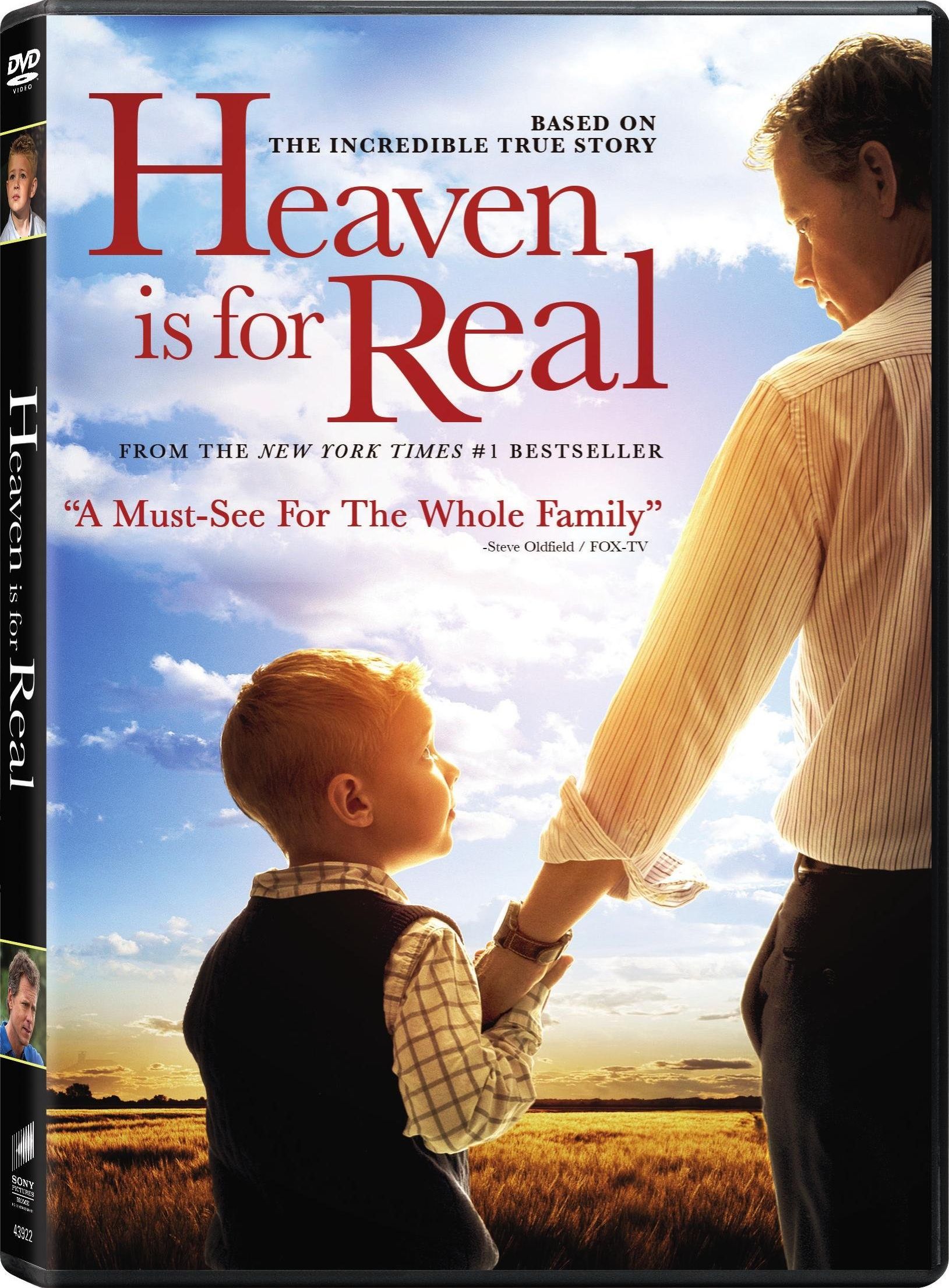
Movie Review: Heaven Is For Real


I read the book and liked it. The book was heartwarming, well-written, and thought-provoking. Whether or not I think there is a theological discrepancy between the heaven that the book presents and the real heaven, the book was a good read. It neither bolstered my faith nor attacked it. I didn't need this story to convince me that there was a heaven, because I already knew there was, not because I have been there, but because I know the Creator of heaven, and I trust what He has told me in His word. Overall, it was a cute story, fun to read, planted a "maybe" or a "what-if" in my mind regarding certain topics (like what happens to miscarried babies), and said nothing (in my opinion) overtly objectionable.


The movie, on the other hand, was terrible. I did not like it, it was a waste of time, it was very poorly done, it didn't resonate, there was no pacing or climax or fluid movement from scene to scene, and overall it attacked the true, Biblical heaven more than it upheld it. They left out good scenes that were in the book and put in cheesy, eye-rolling scenes that were not in the book. The overall effect of the movie was to emphasize doubt rather than belief in heaven's existence. All through the movie, I kept wanting to walk out of the room. It was that bad.

One scene that I particularly disliked was of the family in the car, driving to Denver and singing a Bible chorus together (I think it was the B-I-B-L-E). They are singing half-heartedly, and Colton, the little boy, is not singing at all. He interrupts the music to ask, "Can we sing 'We Will Rock You'?" The whole family stops singing the other song and immediately launches into "We Will Rock You" at the top of their lungs, obviously smiling and having a much better time. Therefore, it depicts Christian songs as boring and Christian people as being incapable of worship, while it depicts worldly songs as universally enjoyable.

Then, when the movie depicts Colton's journey into heaven, it shows him walking into the church and the angels are singing to him. It is truly angelic music, and he interrupts the song to ask them, "Can you sing 'We Will Rock You'?" The angels laugh, a subdued, tittering, sporadic laugh that was so fake and so dumb that it made me groan.

Another scene that is at the top of mind to point out as particularly problematic was when Todd (Colton's father and also the pastor of the local church) is at the graveyard and runs into a woman who is one of his parishioners and who has previously been outspoken and argumentative with him regarding the whole heaven thing. She is there to mourn her son, who was in the military and died at a young age. She is sad and vulnerable and apologetic for being argumentative. She admits that she is mad at God.

"Do you think my son is in heaven?" she asks Todd.

Todd asked her, "Do you still love your son?"

She nods yes.

Todd says, "Do you think I love mine?"

She nods yes.

Todd says, "Do you think God knows I love my son?"

She nods yes.

Todd says, "Do you think God loves my son more than your son?"

She dissolves into tears and shakes her head no and gives Todd a hug while she lays her head on his shoulder and cries tears of relief. The obvious implication that Todd is making is that her son is in heaven. The question is completely ignored of whether or not her son met the Biblical criteria of faith in the work of Christ and repentance from sin.

Finally, there is a scene near the end of the movie where Todd gets a phone call from the local radio station and he is informed that he is live on the air. The talk show host begins to ask him about his son's experience in heaven. Todd says, "Come to the church on Sunday morning and I'll tell you all about it." Up until this point, Todd has been conflicted, doubting, trying to make sense of his son's stories, and trying to make sense of his own faith. This is supposed to be his public statement vindicating the truth of heaven and faith and the resolution of his turmoil. Church is packed and Todd gets up and preaches THE W.O.R.S.T. sermon I have ever heard. It was so unbiblical, so deficient of value, so substance-less, so utterly lousy, and so worthy of ridicule that I literally had to get up and walk back and forth in the kitchen. When I did, my friends asked me, "Are you crying? Or are you laughing?" I replied, "I don't even have words for the contempt I feel for this right now." The film showed the faces of the congregation as Todd preached. They looked sincere. Some were nodding and others had tears in their eyes. It made the whole congregation into a superstitious bunch of idiots to have been moved by a message like that.

If I were to detail all the things I dislike about this movie, they would stretch from the beginning to the end of the film. I am looking for anything at all positive to say about it, racking my brain to think of any redeeming value it has in, and I literally cannot think of one thing. It would be better not to watch this at all than to watch it. I watched it to satisfy my curiosity, and I came away utterly disappointed.


Wednesday, July 30, 2014

Saul and the premature sacrifice

1 Samuel 13
5  And the Philistines gathered themselves together to fight with Israel, thirty thousand chariots, and six thousand horsemen, and people as the sand which is on the sea shore in multitude: and they came up, and pitched in Michmash, eastward from Bethaven.
6  When the men of Israel saw that they were in a strait, (for the people were distressed,) then the people did hide themselves in caves, and in thickets, and in rocks, and in high paces, and in pits.
7  And some of the Hebrews went over Jordan ot the land of Gad and Gilead. As for Saul, he was yet in Gilgal, and all the people followed him trembling.
8  And he tarried seven days, according to the set time that Samuel had appointed: but Samuel came not to Gilgal; and the people were scattered from him.
9  And Saul said, Bring hither a burnt offering to me, and peace offerings. And he offered the burnt offering.
10  And it came to pass, that as soon as he had made an end of offering the burnt offering, behold, Samuel came; and Saul went out to meet him, that he might salute him.
11  And Samuel said, What hast thou done? And Saul said, Because I saw that the people were scattered from me, and that thou camest not within the days appointed, and that the Philistines gathered themselves together at Michmash;
12  Therefore said I, The Philistines will come down now upon me to Gilgal, and I have not made supplication unto the LORD: I forced myself therefore, and offered a burnt offering.
13  And Samuel said to Saul, Thou hast done foolishly: thou hast not kept the commandment of the LORD thy God, which he commanded thee: for now would the LORD have established thy kingdom upon Israel for ever.
14  But now thy kingdom shall not continue: the LORD hath sought him a man after his own heart, and the LORD hath commanded him to be captain over his people, because thou hast not kept that which the LORD commanded thee.

This is such a sad story, and it makes me think on so many levels.

Verse 5-7: There was truly a dire situation going on. Invasion of Philistine armies for Saul was objectively much more intimidating than anything I face (simple lack of income).

Verse 8: He did wait. He waited seven days. He waited past the point of logic or endurance. The situation was getting worse by the minute. The Philistines were encroaching upon him and the people were departing from him and he only had 600 men left. But this apparently hopeless situation was, as we see from Samuel’s words in verse 13, precisely God’s test on Saul to see if he would break and turn to himself or continue to trust in the Lord. He did not trust in the Lord, and God took the kingdom away from him. Are my impending dire circumstances merely the Lord’s pressing, merely the test of faith, merely a proving ground to see where I will break and turn back to self and worldly solutions? Then let me stand fast in the face of impending doom, at the risk of losing everything, even my life. Let me steadfastly look to the Lord for His deliverance, trusting purely and solely in Him, no matter how threatening the circumstances become.

Verse 9: Saul offered the burnt offering. On the outside, an offering is good, but the motive it sprang from proved that he was far from God. It shows how a person can offer lip service to God while all the time their heart is far from Him and their faith is nonexistent. Lip service, like burnt offerings, are not acceptable because of the right wording or the proper outward ceremony. They are only acceptable when they spring from faith.

Verse 10: At this point, Saul did not feel guilty for what he had done. He saw Samuel, and he went out to salute him. It was just, “Hi, how are you?” There was no hint of hiding from Samuel or avoiding him that would indicate that Saul felt ashamed. Saul was justifying himself in the thing that he had done, convincing himself that it was the only proper and necessary step, something anyone would have done, something that had a valid and understandable explanation, so surely God would understand.

Verse 11: Samuel said, “What hast thou done,” and Saul’s answer started with “Because.” Samuel asked “WHAT have you done,” but Saul answered as if the question was “WHY have you done it.” Objectively, the answer to “What hast thou done” is “I offered the sacrifice that I ought to have waited for you to offer, and that was disobedience. I recognize that that is a punishable offense in the eyes of the LORD.” Samuel is seeking to pin Saul down with the truth, and Saul is slithering out from being pinned down, protesting, “Oh, but wait until you hear the reason, and you will see why it was really the only option available to me.” How often have I made excuses and therefore evaded the clear and living truth? How often have I clouded up my own situation by rationalizing and redefining and explaining my justification for why I did it? How clear everything would be if I simply walked in the truth.

Verse 12: “I forced myself therefore.” Saul’s wording makes it sound like he only took this step reluctantly, as a last resort, and that he would not have done it if the situation had been different or if Samuel had come earlier. But is that not the precise thing that God was testing? What is he really saying? “I forced myself to take matters into my own hands.” It was a deliberate step away from trusting God, even while He was offering a sacrifice, calling it "his supplication unto the LORD."

Saul, as a picture of the flesh, gives us insight into the deeds of the flesh. The flesh waits seven days for the Lord, not as a gesture of trust, but as a symbolic gesture of proving to self that the LORD is not coming through and that if anything is to be done, self is going to have to do it. The LORD waits just longer than the flesh holds out in order to prove who is really controlling the man’s decisions. “I forced myself” is a revealing statement of whose dominion Saul was under. A man under the dominion of the flesh is subservient to the flesh. Self is shackled to the will of the flesh, and the flesh, as a vicious taskmaster, forces self to comply with its demands. The flesh is a ruthless dictator who rules with absolute authority and lets no prisoner escape. The flesh is enmity against God. It is not subject to the law of God, neither indeed can be. The flesh forced Saul to commit an action that proved to Samuel and to God that Saul’s trust was not in the LORD. However, Saul does not say, “Somebody forced me,” he says, “I forced myself.” This is because the flesh and the man are inextricably linked. The flesh and “I” are synonymous. It is only when a man dies that he can be released from the flesh and freed to serve the Lord by faith. Glorious gift of the gospel! I can enter into Christ’s death by faith. I can be crucified and buried with Him, the flesh can be left behind, and I can rise to newness of life to serve God in purity and truth without anybody (my flesh) forcing me to live in the old way.

I have entered into this resurrection life, and therefore I am not subservient to the flesh, and therefore I do not have to listen to the flesh’s screeching calls that the Lord is not going to come through for me and that I must turn back to the world’s way of doing things. That is nothing more than so much noise. I am free from that. I can walk by faith, looking unto Jesus, my eyes fixed on Him, and my trust unabated, though the winds and waves rise boisterous to threaten to overwhelm me.

Verse 13: “Thou hast done foolishly.” Oh, how the wisdom of God is foolishness to the natural mind, and how the wisdom of the world is foolishness with God! To the natural mind, it seemed foolish to wait any longer on the sacrifice when the people were departing from him and the doom was increasing. But the real foolishness was departing from the trust in the LORD, who was the only one who could save the situation and bring victory against impossible odds.

“Thou hast not kept the commandment of the LORD thy God, which he commanded thee.” If Saul had walked in faith, then his obedience would have followed, for true faith always results in obedience, and true obedience is only possible to the man who believes his God. The disobedience was the proof of the lack of faith.

“For now would the LORD have established thy kingdom upon Israel for ever.” God was looking for a man of faith to rule his kingdom, and if Saul had been proved here and passed the test, then he would have had the kingdom forever. In that sense, the test was like a door. Would he go through the door or not? Would he turn back to the ways of the flesh, or would he place his trust unflinchingly in the Lord? He could press forward and get through that door and live by faith, or he could shrink back and stay on this side of the door and never cross the line into victory and blessedness and permanent stability. He chose a direction, and therefore he received the corresponding consequences. Oh, how necessary it is, how vital it is, how crucial it is to persevere in trusting the Lord, no matter how black the circumstances look! In each increasing test of faith, there is an additional proving ground. Will we go through the door of faith, and look at the situation from the secure position of being hidden in the strong tower, being built upon the rock, being clothed in impenetrable armor? Or will we shrink back from the door of faith and remain in the cold and windswept land of self-effort, where we will surely be defeated? It would be madness not to enter the Lord’s protection by faith. It would be foolishness! Let the flesh howl its protests. Let the natural world cast up all its arguments against the sufficiency of the Lord. I will not look at them. I will not listen. I will lose my gaze in the beauty of the Holy, Holy, Holy one, and look to Him to be my defense and my aid, and He will come through for me.


Friday, July 25, 2014

Solution to inactivity

I have more to do than I could possibly do in multiple lifetimes, so in order to get the things done that are important to me, I need to redeem absolutely every moment of my time.

I sat down and brainstormed my weekly schedule and discovered that even working a full time job, there would be about 35 hours a week that I could squeeze out from the little gaps between other tasks. That is almost another full-time job, holding out hope that I might truly have the possibility of accomplishing some of my goals. 

However, there are two obstacles to really utilizing these 35 hours per week to their full potential. One is that things will inevitably crowd in to this. There will always be little things like polishing my shoes, opening my mail, and organizing my room that eat up an hour here and two hours there.

The second obstacle is much more serious. My biggest obstacle is myself. My willingness to waste those little moments. The readiness to be slack, to make excuses, to look into my mind and see if I have the urge to tackle this project, and not finding one, being willing to do nothing.

Being willing to do nothing.

That is a problem indeed, meriting its own brainstorm. When time is abundant, I fail to use it properly, and when time gets crowded, I let things drop all the more. Unfortunately, the things that get dropped are not always the things that are the lowest priority. Instead, it is often the things that I am putting off or finding difficult or not motivated on or otherwise procrastinating about. 

I desperately need a strategy for this.

Ultimately, the answer for doing things I don't want to do is the gospel. I desperately need to walk in the victory of the gospel.

If I am doing that, then this is possible. I could work a full-time job and set up a business. Have income and create what I want to create.

Brainstorm on fixing this willingness to do nothing

I find that this is the case, and I disapprove of this being the case, so therefore I must discover a strategy for eliminating this willingness to do nothing. 

Pep talk

Are you serious? Are you really willing to do nothing? Are you able to live with yourself when you sit around and let time pass without utilizing it to the maximum of its potential? Don't you know you can't get that back? Don't you abhor the wasting of your life? Don't you see how much impact you could have by maximizing your moments to the fullest? Think of the income you could generate, the extra studies you could accomplish, the amazing stuff you could produce (songs, works of authorship, businesses, and other works of creative genius). Don't you realize that you are bored at work if you don't have enough to do, and you will be bored with life if you don't make much of it? Do you see how massive your tendency is to let the little moments pass unheeded? Do you not mourn their passing? Do you not see your life slipping away? Do you not recognize how much more fulfilling it is to not prefer leisure, but rather prefer intense, unflagging productivity? Then let no energy pass unused, let no stone remain unturned, let no strategy remain only partially implemented, but get up and RUN forward in the worthy pursuit of the things that will make your life count. 

Cool-headed assessment of the situation

I just spent a week and a half at my sister's, and during the day I was purely free to pursue my own desire. My sister and her husband were at work, and I had the quiet house all to myself from 5:00 am until 4:00 pm. That is 11 hours of solitude and peace conducive to productivity. So what did I do? I slept in, took a shower late, dawdled around making food, mindlessly surfed my computer, and only got around to working on my book once.

This is my default when I am left to myself to choose what to do. This will continue to be my default unless something changes.

And this is unacceptable.

Hence the necessity of a strategy. A pep talk is good, but not enough. A pep talk is inspiration for action, but it is not the same as the action itself, nor does it have the ability to produce or cause action. All it can do is inspire action. That is not enough. Strategy will move this unproductive human being closer to actually achieving the goal of action.

The strategy cannot include a reliance on the sudden discovery of huge amounts of willpower and drive and matchless work ethic. I don't have those naturally. If I did, I would already be using them instead of brainstorming a strategy right now.

The fact is, I don't have those things, and I have been puzzling for a long time over what to do with myself given that 1) I am bored working in the kind of position where you don't need or use those qualities, and 2) I disqualify myself for any other kind of position simply by not possessing those qualities. I have been puzzling over this for about 4 years now, ever since I discovered that there was absolutely nothing I knew of that I could wield over myself that could cause me to do what I didn't want to do, and what I didn't want to do was work. This is a sure recipe for failure.

The Strategy is the Gospel

Fortunately, I have discovered that there is one tool that actually does work for making myself be someone I am not and do things I would not do and wield strength I don't have. That is the gospel. The grace of God is bigger than me and the power of the gospel can actually bring me through this brick wall of the problem of my own self that I always encounter when I want to get something done.

Whether or not I am walking in the faith of the gospel is THE determining factor for whether I have it in me to start a business, write a book, do ministry, or any other thing that is important to me that previously I had failed at.

So there is where I need to center my strategy. I must strategically live in the power of the gospel, and then everything else will fall into place.

Even that is something that requires the power of the gospel in order to do it. I could say, "I will guard my ability to walk in the gospel by maintaining fervent prayer and disciplined Bible study," but those things themselves are impossible to me without the power of the gospel.

The walk of faith is SO DIFFERENT from the walk if self reliance. It is something hard to get used to, hard to practice, hard to figure out, hard to maintain. I say "hard," not because faith is hard—faith is easy—but because it is hard to surrender control, hard to admit reliance on another, hard to give up my pride, hard to even perceive something that doesn't require cerebral work like "figuring it out" and doesn't require physical work like "just doing it" because it is outside the worldly realm and exclusively in the spiritual realm. Spiritual things are imperceptible except to the eyes of faith. Grace is inaccessible but through the conduit of faith.

Therefore the cry of my heart becomes, "Oh, for more faith!"

But the resulting step that naturally occurs to a mind still in the track and theme of "let me brainstorm a strategy to solve this" is, "Ok, if I need more faith, then let my strategy center on getting more faith, improving my faith, and strengthening my faith." Interestingly, though, I already know the single step for doing this. It is simply looking into Jesus.

Therefore, my entire conclusion for this entire document is that I must look unto Jesus. That is the only answer, the only option, the exclusive solution. Do that, and I will have faith. Have faith, and I will have access to grace. Get grace, and I will have the strength and divine empowerment to do something different than I would have done if left to my own devices. Be divinely empowered, and I can succeed in book writing, business creation, and whatever other endeavors I undertake.

My strategy is formed. Walking in it is easy, but not automatic. Let me fix my eyes on Jesus and walk in the power of the spirit. That is my path.

"The worldling does not care for Christ because he has never hungered and thirsted after Him. But the Christian is athirst for Christ. He is in a dry and thirsty land where no water is and his heart and his flesh pant after God, yes, for the living God! And as the thirsty soul dying, cries out, “Water! Water! Water!” so the Christian cries out, “Christ! Christ! Christ!” This is the one thing necessary for me and if I have it not, this thirst will destroy me!"—Charles Spurgeon


Monday, July 21, 2014

"Your bra strap is showing"

A satire on modern Bible interpretation methods

Setting:
Two thousand years from now, English has ceased to be a living language, and scholars are discussing with the public the analysis and interpretation of 20th century literature. In the body of work they are discussing, there is a work of fiction containing a conversation where a young woman named Emily says to her friend Hilary, "Your bra strap is showing," and this creates a scandal, Hilary gets offended, their friendship falls apart, and these events affect the outcome of the story.

Scholar: 
"Now, we see here this critical comment that the woman makes to her friend. She says, "Your bra strap is showing," and then everything falls apart. Why would this be? How could this simple comment have had such implications? What did it mean? 

"Up until now, the common interpretation was that Hilary's bra strap was a piece of clothing, a normal woman's undergarment, and that for Emily to point it out was a suggestion of a lapse of modesty, possibly bringing embarrassment to Hilary. 

"However, what did she really mean? In order to understand the significance of this comment, it is of the utmost importance to discover what it would have meant to one of the original readers. Fortunately for us, recent discoveries have brought to light a couple of ancient documents, dictionaries of the language actually published within 50 years of the same time period. We have discovered from the ancient sources of Random House and Merriam Webster that the real meaning is actually something much deeper. 

"You see, the word 'bra' is actually an abbreviation of the word brassiere, which comes from the Old French bracieres, which came from the root word bras, meaning 'arm,' and it meant arm guard, or armor for the arms, or arm protectors. Other words that came from this word were 'brace' (something that holds parts together or in place) and 'bracelet' (an ornament for the arm), which were both common words in use at the time of the writing. Therefore, we can see how the original meaning of this word gives us an additional depth of understanding into the meaning of Emily's comment. All of these shades of meaning would have been clear to Hilary, and so she would have understood that Emily was insinuating that she was arming herself, putting up shields, raising her defenses, and protecting herself. 

"Now, there's more. Consider the strap. The primary definition of "strap" was a long strip of leather or similar material, for binding trunks, baggage, or other objects. According to our research, trousers first went strapless in 1846, and brassieres in 1935. This work was written in 1964, so Hilary could not have been wearing a bra with straps, or if she was, she was wearing a style that was long out of fashion, as in the case of the old-timer still wearing suspenders. However, Hilary was young in the setting we describe, meaning that Emily was definitely insinuating something derogatory by mentioning straps.

"Finally, our research has turned up some startling new light on the word "showing." We are familiar with the common meaning of the word 'show,' which is to cause or allow to be seen. However, there are many other meanings of the word 'show,' giving us the final key to the interpretation of Emily's comment. It can mean many things, but here are just a few prominent examples: 
  • to present or perform as a public entertainment or spectacle:
  • to give information that proves (something)
  • to offer for sale
  • to finish third in a horse race
"The etymology of this word is fascinating. Our ancient source, Merriam Webster, tells us that 'show' comes from Middle English shewen, showen, from Old English scēawian to look, look at, see; akin to Old High German scouwōn to look, look at, and probably to Latin cavēre to be on one's guard.

"There we are again--the idea of being on one's guard. This goes back to the armor idea that we first discussed and proves that there is something deeper than mere modesty in Emily's comment. She is using innocent-sounding phraseology as code for an accusation that Hilary is beginning to arm herself against her friends as with a shield, strapping it on and being on her guard, with added layers of implication that this is being done ostentatiously, as a spectacle to the public, that it has been proved, that it sells out her friends, and that it is a third-rate thing to do. Hilary's reaction proves that she understood perfectly what Emily said, because she immediately became defensive, and their future actions of being offended at one another and breaking off the friendship make perfect sense if this was what Hilary was doing." 

The crowd applauded the depth and wisdom of the scholarship, and anyone in the future who doubted this interpretation or referred back to the old, plain meaning was instantly labeled ignorant and untaught.


Sunday, July 20, 2014

Why I don't know that song

Scenario:

--------------------

Person mentions a popular song or musician. "You know so-and-so?" "You know that song?"

I shrug. "Never heard of it."

Person gasps, faints, hyperventilates, and exclaims, "YOU'VE NEVER HEARD OF ___????"

"Oh," I joke, "I grew up under a rock."

--------------------

That is the flippant answer.

--------------------

Actually, the reason I am absolutely illiterate about contemporary music (from Elvis to Miley Cyrus) is that when I emerged from under that rock, I looked around, noticed that this kind of music existed, observed that it did not fit in with what I want for my life, and made a deliberate and continual choice to exclude it.

I could have, after all, emerged from my sheltered background and made straight for all the music I had missed out on all those years. I am a musician. I have an incredible affinity for tunes. Something I hear once can end up stuck in my head for days. I could easily have compensated for my upbringing and rapidly made up the time if I had wanted to. That would have been easy. In a way, it would have been much more convenient. There would have been so many conversations I could have participated in rather than being left out. I would have avoided so many occasions of being made fun of. I remember being in England and telling someone I had never heard the song "American Pie." I thought I would never hear the end of it. But no amount of not being able to talk about that whole topic of conversation, and no amount of being made fun of for not knowing that popular person or song, can dissuade me from my resolve on this point.

So it's not really fair or honest for me to cast it all on my upbringing and say I don't know about this or that because "I grew up under a rock." In the first place, I didn't grow up under a rock, and in the second place, even if I did, it wouldn't account for my continued resolve not to have anything to do with that music.

Simply put, there is a way I want to live, and a kingdom I belong to, and everything that hinders or fails to promote my growth and advancement in that kingdom must be eliminated.

The way I want to live is to passionately pursue Jesus Christ in absolute surrender for all my days. The kingdom I belong to is the Kingdom of God. I am not of this world, and the things of the world do not fit in with my life in the kingdom of God, nor do they even appeal to me.

Granted, there are some areas that are blurry to me, some areas where I still need instruction and enlightenment in order to put away things that I am unconscious that they are a hindrance to my Christian walk. In these areas, I need grace, I need the Lord's patient teaching, I need conviction, I need my eyes to be opened. For instance, the books I read. Is it detrimental to my faith to read Don Quixote or the Iliad or The Lord of the Rings? That's not clear to me. It may be clear to others, and I may have things to learn from them, but presently that area is blurry and indistinct to me. But of course, if my eyes should be opened in the future through conviction, then all those things will have to go, too.

However, there is one area that is crystal clear to me, unmistakeably bright, and blindingly obvious. Rock music is a detriment to my Christian life. It is not welcome. It has no place. It tears me down, destroys, hurts my inmost being. It invades my peace with something that is totally foreign to the kingdom I dwell in. It is altogether incompatible with my citizenship in heaven.


  • The angst and rebellion of the lyrics do not resonate with me. 
  • The pounding beat is repulsive to me. 
  • The way it tempts the body to pulse and gyrate is wrong to me. 
  • The vocal styles (screaming/belting/seductive/breathy/twangy) do not appeal to me. Indeed, they usually mystify me. Do people really like it to sound that way? 
  • The noisy, chaotic clamor is oppressive to me. 
  • The themes explore all the possible categories of the depravity of man. (Lust, greed, pride, love of money, etc.) 
  • The language is often totally outside my vocabulary. 
  • The tunes and musical structures are boring to me. Repeated notes, small variety of notes, all the same chords, predictable rhythms. Again, it mystifies me. Do people think this is good? 
  • The musicians are not people I can admire, either in their lifestyle or in their appearance. 

I don't believe music is just notes on a page, just sound waves coming from an instrument, or just mere amoral tone, rhythm, melody and harmony. I believe music has the capacity to carry spiritual content. Just as the written word is more than mere letters and ink ("the pen is mightier than the sword"), music is more than mere notes. Music has a spiritual content, and that spiritual content can be very, very dark. This spiritual content can exist even in music that is purely instrumental. A Christian who is in tune with the Spirit of God can sense what music grieves the Holy Spirit, but it takes being very sensitive, not deadened to the influence of different kinds of music (or prejudiced in favor of it).

My response to this music is absolute. I simply deny it access to my life in every possible way. I do not turn it on the radio. I do not own any music tracks that contain it. I do not let it in through my computer, my mp3 player, or any other channel that I have control of. However, living in this world, surrounded with people who love it, it is impossible to not hear it sometimes. If I walk into a store that is playing it, I will immediately start silently quoting Scripture to block it out. Sometimes, if it is bad enough, I walk out of the store. If it comes on a television, I will mute it if I have that option. If I am in the car with someone who is playing it, I will ask them (nicely) to turn it off. If that is not possible, I quote Scripture to myself and/or avoid riding with that person. If people bring up songs, lyrics, artists in conversation, I lose all interest in that conversation.

This is why I don't know the songs most people talk about. I simply haven't heard them. Or if I did hear them, it was in a situation where I was probably actively blocking them out. I haven't heard them because I have chosen not to hear them, I have resolved not to hear them, I have deliberately closed my ears to them, not because I just somehow "missed out" on the latest and greatest hits.

The benefits to my life for this decision have been incalculable.


  • I have a certain level of strength and stability that mystifies others, which I am sure they would have, too, if they cut out all the music I cut out. 
  • In quiet moments, when a song comes into my head, the only possible kind that can get stuck in my head is a hymn of praise to the Lord or a beautiful, soaring classical melody, since that's the only kind I know. 
  • I have no thoughts planted in my head of suggestive themes that I would rather not have thought of. 
  • I struggle very, very little with lustful thoughts. 
  • I don't "need" music. I can go for days without listening to any music. The mental clarity this brings is something many people have forgotten about. 
  • All of the "music storage" space in my brain is given to God-glorifying hymns and songs (and a few classical piano pieces), and none of it is given to songs in praise of anything else. I've never officially counted, but I think I can probably sing a thousand hymns from memory. This is a vast reservoir of material for private worship, which is incredibly strengthening. 
  • I am "wise concerning good, and simple concerning evil." (Romans 16:19)


Basically, I have chosen to only include in my life that which is beneficial in my life.

Ultimately, in a manner of speaking, you could say that I grew up under the Rock (Christ), and that protected me from going out and listening to a rock (concert).

So now you know the reason why.

--------------------

(I imagine I will get a bit of flak for this post. This issue tends to stir up intense emotions.)


Friday, July 18, 2014

Perspective when dreams blow up in your face

I have been so confused, so bewildered about what to do, and David Wilkerson just hit the nail on the head on my condition in his World Challenge Pulpit Series newsletter from March 17, 1997.

Let me ask you: How do you react when all your plans and dreams blow up in your face? You were so sure you heard from God. You thought he gave you direction, encouraging you to move forward. Everything you read in his word seemed to confirm your plans. You prayed about every step along the way, always giving glory to God. And the Lord seemed to be leading on. 
You were happy, thinking, "At last - I'm going to see my prayers answered! God's plan is finally beginning to come together in my life."
Then one day, all of a sudden, your dream blew up in your face. Your plan was destroyed, your dream shattered - and it all lay in ashes at your feet. You didn't know how to make any sense of it. That's when Satan came along, bringing his lies:
"See what you get for being so strict about your walk with God? This is how he treats you when you trust him for direction. He lets you become confused about his voice - and he gives you phony guidance! He lets you hear voices and see words from the scriptures. And then, when you're finally ready to move in, he abandons you. He leads you on, and then he drops you!"

Oh my goodness. 

That's exactly what I've been doing. 

In the confusing, upsetting turmoil that I just went through, I've been doubting God's goodness to me, His ability to communicate His will to me, and His intentions for my life. David Wilkerson's message in this article centered on Psalm 73. Asaph had almost slipped because he was focusing on the prosperity of the wicked. I, too, had gotten my eyes off of Christ and onto my circumstances. 

I was mistakenly assuming that if I got God's guidance before taking any given step, I couldn't possibly get hurt and the plan could not possibly fail. It was, I suppose, a variation of the prosperity doctrine (which I would have repudiated instantly if I had seen it as such). 

It is not just inadvisable to doubt God. Wilkerson points out that it is actually sin--a sin that the people of God must be warned about; an insidious, sneaky sin that can drop us into a bottomless pit of unbelief. 

When all my beautiful dreams blew up in my face, I doubted my ability to hear God's voice. If I was that bad at hearing from God when I thought I had gotten his leading and direction, then how could I ever be sure if I was being directed by Him? 

Well, actually, who is that message coming from? 

The enemy, of course. 

How is it that I had not seen this before? 

What does God actually say in His word? Does he ever say that we cannot possibly get hurt and that our plans cannot possibly fail? No. He promises that in the world we will have tribulation. He leads us to expect to be hated, misunderstood, and persecuted. Far from promising a life of ease, he promises us trials and suffering. I am barely getting a taste of difficulty. On a scale of 1-100, with 1 being a life of ease and pleasure and 100 being martyrdom, I have maybe moved along the scale from a 1 to a 2, and I am already fainting and doubting and moaning, "Oh, woe is me." 

Get a grip, Rebekah. 

• • • 

The other thing that helped me to have a perspective shift was running into this video about Louis Zamperini. I knew the story, because I had read Laura Hillenbrand's fabulous book, Unbroken, but just reliving it reminded me of how much more suffering and heartbreak and difficulty others have made it through, and how little I really have to complain about. 


It is almost amusing, really. Other people have gone through stuff like this, and I'm whining and boo-hooing and wringing my hands and saying "what am I going to dooooo?" when the extent of my hardship is that I need to go out and hunt for a job. 

Yeah. 

My strength indeed is small. 


I hear the Savior say, 
Thy strength indeed is small. 
Child of weakness, watch and pray. 
Find in me thine all in all. 


And glory to God, He is fixing my eyes back onto Himself, and when my gaze is lost in Him, all these other things seem so trivial.


Wednesday, June 18, 2014

How God Filled My Gas Tank

On this date one year ago, I was driving across the country from Colorado to Tennessee to pick up my stuff and move it out to where I would be living. It was right after I got back from Haiti, and God had provided a Chevy Blazer for me, which I wrote about at the time I got it. He had also provided $50 for my gas tank in a lovely story that I also told here on my blog.

I didn't know it at the time, but there was about to be so much more to the story. The details are so God-glorifying, because it was so only and totally HIM that did this and took care of me, and I believe it's worth sharing.


As a bit of background, back in the summer of 2012, I had sold "Matilda," my Mercury Grand Marquis, for $2000, and then I spent that money in order to fund the initial part of my time in Haiti. It was with a bit of regret that I parted with the car, not because I loved the it so much, but just because I knew that I once the money was gone, I wouldn't have a car OR money.

"Cast thy bread upon the waters," Solomon says, "for thou shalt find it after many days." (Ecc. 11:1). That is how I felt. By the time I got back from Haiti, God had provided more, and I had $2000 left in my bank account.


I returned from Haiti to Colorado and bought the Blazer for $1650, leaving me $350. I filled up the gas tank and God provided enough to fill it again, and then I had a couple of airport runs, which emptied me out again, leaving me with just $300.

I had planned to go home to Tennessee, and I calculated that gas (one way) was going to cost me $300 to $350. I really asked the Lord about whether or not I should do it, because it seemed irresponsible and just plain foolish to use up all the rest of my money to get home and then not have anything to get back. But I felt like He was calling me to go home, and that He would provide.

Then, in a move reminiscent of His normal impossible-working pattern, He wiped out my $300. First I got pulled over for a burned-out headlight and had to replace it. Then my spark plugs were bad and needed to be replaced. Then I had an adventure on the highway that ended in the amputation of my driver's side mirror. Finally, my battery died. Fixing all these issues cost $300.

My scheduled departure day was Tuesday, June 18. Monday evening, my roommate and I had a prayer time together, and I prayed about my $300. "Lord," I said, "You know I had $300 for gas money, and now it's all gone. Yet I still believe that you are calling me to go home, and that you are going to take care of me and provide what I need. You know my needs. What are you going to do?"

That same evening, someone handed me fifteen $20 bills. Exactly $300 cash. "This is for your trip."

My roommate and I exchanged shocked glances, jaws dropping. Thank you, God!

I left in the morning and drove 22 hours across Nebraska, Iowa, and Wisconsin, stopping at my sister's house to visit for three days. When I arrived near her house, I filled up my tank, and after that, I had $60 left, which would not be quite enough to take me the 800 more miles to Tennessee. "Ok, God," I thought. "What are you going to do next?" I was kept in perfect peace that He was taking care of all the details.

On Thursday, the day before my departure to Tennessee, I went to have lunch with some old friends, and I was telling them this story, exulting in how God was blessing me with provision (but leaving out the fact that I didn't have enough to get home). When I finished, they told me a fascinating story of their own about how God had provided for them an extra $200. "Now I'm going to pass that along to you," the husband said, and with that, he handed me two $100 bills.

"OH!" I said, "I didn't tell you that story to hint to you that I was asking for money!" I said. "You don't have to give me anything! Really!" But he prevailed and I accepted, making a mental note to self that if you tell these kinds of stories to people, it may come across as manipulative or end up being a subtle way of hinting for money (suggesting compassion for the 'poor penniless missionary'). In this case, it wasn't; my only thought was to exult to them of the grandeur of God. However, after this happened, I determined that it would be better to wait to make it public until long after the fact, so that the details of my immediate pennilessness would not come out (which is why I'm telling this story now, a year later, instead of right when it happened).

I went on down the road, filling up my gas tank as needed along the way. God told me to give away $100 of it, which I did.

I arrived home Friday night with $50 left, and I waited to see how God would provide the next step. I needed to drive back to Colorado with a U-Haul trailer full of my stuff. He sent an encouraging token of His remembrance when the next Thursday, I found a card in my mailbox with a check for $50.

Fast forward to June 30. I found out that the U-haul rental would be about $200. My heart kind of sank thinking about the amount of gas that it would take to get back to Colorado while pulling a U-haul trailer, but I realized, "Why sit here pining away about this when I could just ask for it?" So I asked. "Lord, I need about $500. Can you provide that?" And His answer immediately came: "Done." Taken aback, I said, "Oh. Okay. Thank you!" I didn't know how or when He would do it, but I took him at His word.

That evening, I checked my bank account, which I hadn't done for at least a week. My eyes widened. Five days earlier, on the 25th, someone had anonymously transferred $1000 into my account. "Before they call, I will answer." My prayer of that morning had been answered five days earlier.

Two days later, God told me to give $300 of it away, which I did.

The next day, someone handed me a check for $400.

Do you start to see the marvelous details of how this is working?
•  I gave away $2000; I got $2000 back.
•  I gave away $100; I got $1000 back.
•  I gave away $300; I got $400 back.

I'm not building a "prosperity doctrine" here. I gave up what He asked freely, without expecting anything in return. However, I would like to ask, Is it possible to out-give the Lord? We need not hoard, grasp, clutch, or protest, "Let someone else give." We can live with an open hand.

We clench our little fists around our possessions because we are afraid that if we let go, we will lose everything--but when we open our hands and take the plunge into that fearful territory, we discover that we can live with absolute fearlessness and peace.

My dad loading the 5x8-foot U-haul

Anyway, getting back to the story, by the time I had to go back to Colorado, God provided everything I needed in order to rent the U-Haul trailer and make the long drive. Between the U-Haul rental, gas, food, and tolls, it cost approximately $700 to drive out to Colorado. Round-trip, the total travel expenses were about $1050. In the meantime, I gave away $400 and even started sponsoring a child with Compassion International for $38 per month. Being rich enough to give money away is wealth indeed, especially when just a minute ago, you had nothing. Beyond the travel expenses, I lived on the bounty that God had provided for the next month and a half while I worked on my book. Then, just before I ran out, He provided a job.

So that's the story of how God filled my gas tank all the way from Colorado to Tennessee and back, when I started with zero the night before my trip. How great is our God! Sing with me!

And that was only the beginning of the amazing work He was about to do. There was the story of the job, the guitar, the yard sale, and the house, and so many more little evidences along the way of His incredible work to lead me forward. Truly there is no limit to His ability.